
The Tactical First Sergeant
By Major William "Billy" Cheatham
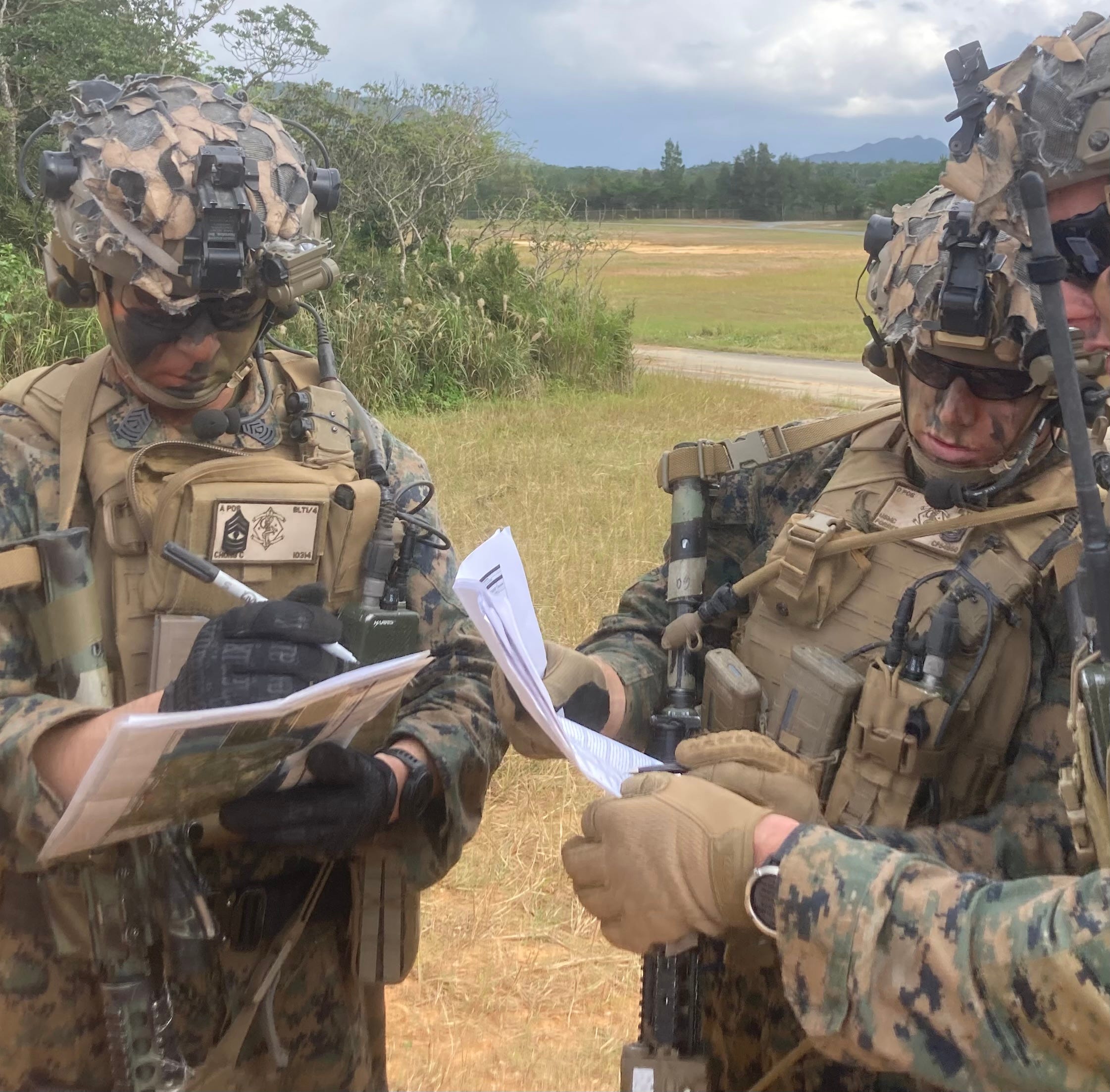
One of the most significant questions a new company commander can ask is: “What can my First Sergeant (1stSgt) do for the company?” There is much to consider with this question, all tied to the relationship of the company commander and 1stSgt. In many ways, the relationship will mirror the challenging but necessary office work required to command the company. Over time, through some challenging experiences, a company commander will learn what a 1stSgt can do in this context, just as the 1stSgt learns what they can do for the company. However, a more complex question remains: “What is my 1stSgt’s role during tactical operations?”
This second question is not meant to imply that no 1stSgt ever fought alongside their Marines and Sailors or that they do not know what to do in the field. There are whole books on 1stSgt’s leading in combat. The principal message is quite the opposite. A 1stSgt can exert a substantial influence through their mere presence, and even more influence when they play a crucial tactical role for the company. This influence is magnified if they are actively involved in planning and execution.
This article offers insights and recommendations on how a 1stSgt can gain a tactical advantage for their company in planning, training, and combat. While not exhaustive and not claiming significant innovation, it establishes how the company commander is responsible for making this happen. Further, the article delineates key tasks a 1stSgt can perform to distribute command responsibilities effectively and enhance a company commander’s capacity to deploy the company, with the 1stSgt playing a key role in the tactical plan.



Setting Up for Success
When my 1stSgt arrived at our company, I shared insights I had gained from others and personal experience. During our initial counseling session, I advised him, “You need to get your gear, get it right, and get to the field. It’s key that the Marines see you going to the field and thriving.” In many respects, I aimed to dispel the idea that a 1stSgt remains “in the rear with the gear.”
This wasn’t a new message for the 1stSgt, and he was certainly familiar with combat operations. He was previously a Motor Transportation (Motor-T) Senior Non-Commissioned Officer and had deployed to combat zones in Iraq. As a young NCO, he ran multiple combat resupply missions as the gunner atop a fuel truck. He wasn’t exactly risk-averse in the field. However, he had never served in an infantry company. I was direct: “1stSgt, if I don’t show up to the field once, I will lose all credibility. If you show up to the field ready to go, especially in the first couple of months, the Marines will notice, and you’ll build a ton of credibility with the grunts.” We both fully understood the point and made it our mission to get out with the Marines.
Our thesis on this would prove true shortly. Less than three weeks later, the company was divided for a battalion field exercise (FEX) tied in with a WINTER FURY exercise. My Company Gunnery Sergeant (Gunny) and I executed an air assault to Washington State with one platoon, while my Executive Officer (XO) and 1stSgt led the remaining company at Camp Pendleton. Upon the return of my detachment to Pendleton, I linked up with my 1stSgt and the rest of the company during night training exercises. My 1stSgt had spent the last couple of weeks getting his gear right, matching it to our gear to fill our mission set, and setting out to support the Marines in the field. Later that night, a Sergeant from the Headquarters Platoon remarked, “1stSgt, I can’t believe you are still out here in the field. I have never seen a 1stSgt staying out here this long.” My 1stSgt looked at me with a smirk and responded to the NCO, “Of course, Marine! Where else would I be?”
Credibility established.
That mentality–adaptation, learning, getting in the fight–stuck. My 1stSgt and the rest of us in the company team began to get creative. From 1stSgt’s perspective, he knew he had to be somewhere he could lead the Marines. From my perspective, it confirmed that presence made a difference. Now, we had to figure out what presence looked like when matched with capability.
Planning Accountability
One of the 1stSgt’s key responsibilities remains accountability. While that often means maintaining rosters of who is where and when, it can be taken further. But what if 1stSgt knew where everyone was before the final manifest in the assembly area (AA)?
The 1stSgt can play a pivotal role in the planning of personnel placements. While the serial assignment tables and manifests should be included in the 1stSgt’s kit, regardless of who prepares them, having the 1stSgt contribute to the planning process assists in proactive management. By understanding in advance the locations of all personnel and each subordinate unit’s mission, they can enhance accountability and achieve greater clarity regarding personnel locations before vehicles or aircraft depart the AA. By working with the XO and Company Gunny’s tactical weapons expertise, the 1stSgt moved beyond tracking personnel and became an advocate for the plan. This approach ensures that the 1stSgt is aware of who needs to enter the battlespace and when.
This involvement in planning significantly benefited our company. Throughout a series of challenging lessons on developing an Assault Support Serial Assignment Table across multiple training exercises, my 1stSgt gained a thorough understanding of the document’s purpose and how to ensure its proper implementation. In effect, it became his operational directive. Consequently, he developed a vested interest in its creation. This engagement extended to his participation in the Air Combat Element’s ready room during the Rapid Response Planning Process, where he collaborated with air planners to formulate the projected operational waves.
A 1stSgt need not master every weapons system or gain the technical knowledge of a career infantryman. A basic understanding of each unit’s functions allows them to contribute to the planning effort. When a company commander and 1stSgt take active steps to build a role for the 1stSgt in the planning process, it helps create another line of effort along which the company commander can prepare to extend his command and control.
Force Flow in the Zone
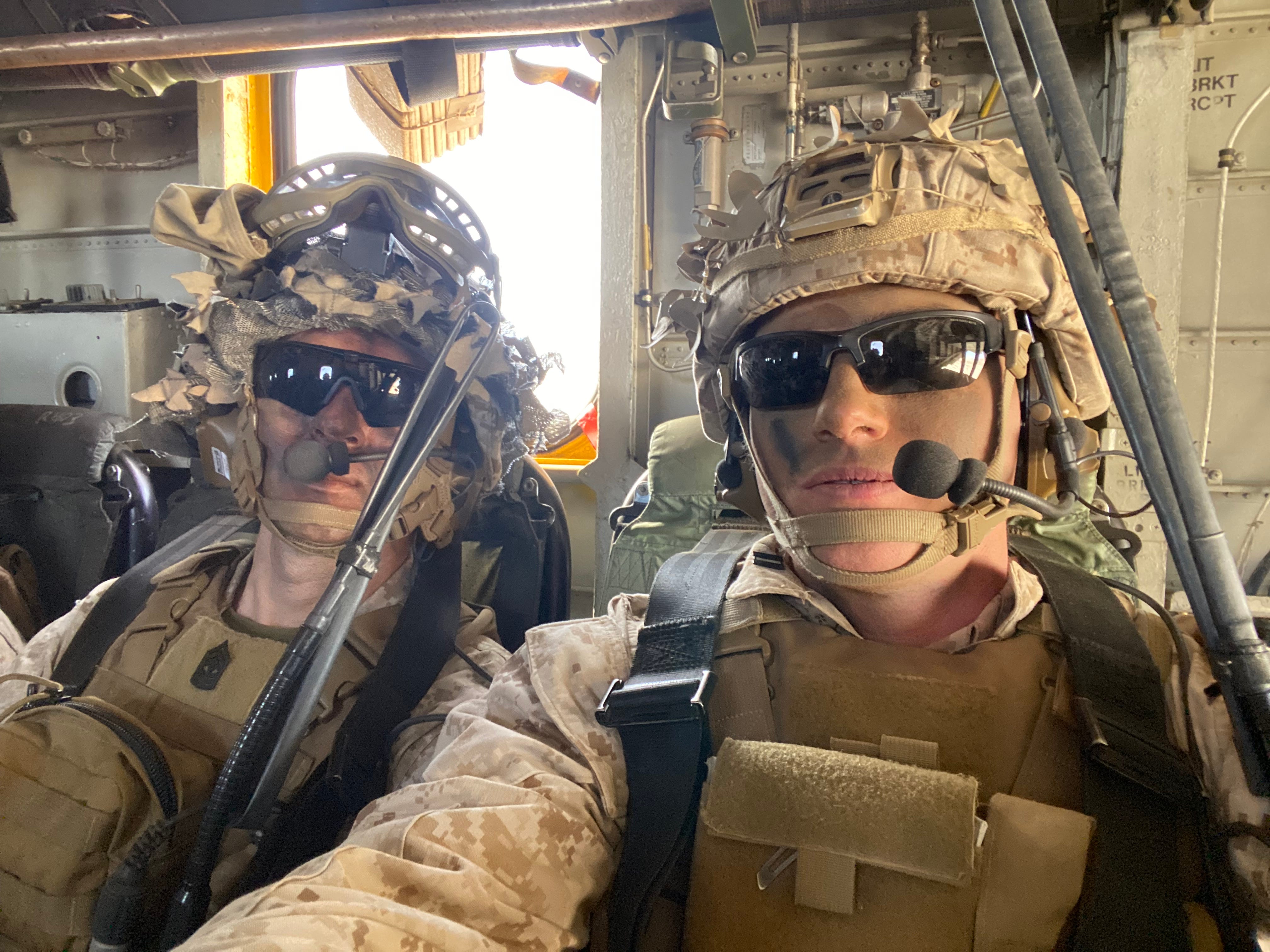
In a similar manner to how personnel-related tasks are organized, the 1stSgt could assume another essential role. During operations, our 1stSgt served as a primary marshaling officer upon departure from the AA. This practice is not uncommon. He also provided critical feedback when the team reached the objective area.
There is a rationale for the 1stSgt pairing with the company commander in the field: sometimes to advise, and other times to establish command presence. However, given the necessity to disperse and the differing responsibilities in current combat environments, it is advisable to separate the roles of the company commander and the 1stSgt. The company commander must concentrate on the mission objective, while the 1stSgt is well-suited to remain at the force’s insert point. If the 1stSgt concentrates on the insert point, they can serve as a force flow coordinator for the company commander. While the company commander moves forward to employ the company, a 1stSgt possessing a thorough understanding of the plan can assist in directing forces across the battlespace. This capability is particularly valuable when the plan necessitates changes, requiring new forces to be redirected toward new objectives. By maintaining communication with the company commander and other company personnel, the 1stSgt can facilitate the deployment of rearward reinforcements as the company commander advances. At a minimum, the 1stSgt can become a great “traffic cop,” directing squads and platoons where the commander needs them as the engagement unfolds.
The requirements for a 1stSgt to facilitate this operation include the ability to coordinate and signal forces within the designated objective area. The 1stSgt will need to be proficient in marking plans, directing approaching aircraft, and controlling troops as they disembark from vehicles or aircraft. A company commander and the 1stSgt must work together to train these skills. Opportunities for this will arise. For example, a unit designated to train with the Expeditionary Operations Training Group will have ample time to rehearse these skills and multiple opportunities to practice them with their supporting units.
Our company’s 1stSgt effectively fulfilled this role. Although the 1stSgt and I generally coordinated during the same serial for an air assault, we immediately dispersed upon arrival at the Landing Zone (LZ). While I departed the LZ with our initial elements, our 1stSgt remained on-site with a small team to provide aircraft marking and direct platoon commanders as they oriented themselves within the LZ. On one occasion, aircraft adjusted their landing points, resulting in platoons being positioned on different sides of a large LZ. The 1stSgt played a crucial role in managing traffic flow and guiding the units accordingly. In each instance, his leadership in marshaling platoons back onto aircraft facilitated an orderly extraction from the LZ.
Planning and Executing Casualty Evacuation
CASEVAC is an underappreciated area where the 1stSgt can lead. If 1stSgt’s role extends solely to advising the company commander, their primary responsibility remains the welfare of the Marines and Sailors. Consequently, it is understandable that they may be the most suitable individual to manage CASEVAC. This action reassures the company that the 1stSgt supports their needs.
Although most individuals have likely observed a 1stSgt performing these responsibilities, there exist certain techniques that can enhance this practice. First, the 1stSgt should be involved in CASEVAC planning. While the Company Commander is engaged in operational proceedings, the 1stSgt can review the plan and assist in determining the most effective method to evacuate casualties without disrupting the mission. Second, this process enables any CASEVAC asset leads (the CASEVAC aircraft pilot, the CASEVAC amphibious vehicle, etc.) to become acquainted with the 1stSgt early in the planning.
It is also advisable that a 1stSgt maintain a close working relationship with the Senior Line Corpsman, akin to a battle buddy relationship. When the company sustains casualties, this familiarity enables the Senior Line Corpsman to communicate effectively with the 1stSgt while triaging and preparing to receive casualties at the company casualty collection point. Additionally, it creates an environment in which the Corpsman can focus on triage responsibilities, enabling the 1stSgt to make informed decisions about personnel movement.
There are many ways to crack the CASEVAC nut, and every situation is different. For more information and recommendations on 1stSgt CASEVAC, I recommend that a company commander and their 1stSgt read SgtMaj William Skiles, USMC (Ret.)’s article “Urban Combat Casualty Evacuation” (Marine Corps Gazette, Jan 2008). While urban CASEVAC is just one consideration, the article offers ideas on how unit leaders can get creative under fire. In the end, what’s important is that the 1stSgt thoroughly invests in this process.
It is the Company Commander and the 1stSgt’s Fight
Just because my 1stSgt and I figured out one way to do things does not mean that is the only way. Every 1stSgt has different experiences that may bring a special “-ism” to the fight, making them uniquely capable of performing tasks. Having a 1stSgt with prior combat deployment experience as a Motor-T operator certainly helped, but learning the nuances of operating in an infantry company took time and practice. It really is up to the company command team to identify their strengths, consider how they should fight the company, and decide where they can best influence the fight. My 1stSgt, my company team, and I took the time to figure it out; it didn’t come naturally. We reviewed our mission requirements, and I delegated different responsibilities across multiple iterations of air assault operations to the 1stSgt to ensure our standard operating procedure was correct. He, in turn, took the time to figure out and recommend different ways to be gainfully employed. It required learning on all our parts to maintain accountability in the field, to speak with air crews, and to develop a slew of other skills needed to conduct company operations.
1stSgt’s involvement comes down to one key point: how much the company commander and the 1stSgt dedicate to determining which point of friction they should both contend with. A company commander should invest in developing their 1stSgt to achieve decisive tactical impact, just as the 1stSgt should be advising the company commander on commanding the company. If a new skipper internalizes this, the rest is up to them to decide.
The conflicts of the 21st century are transforming many aspects of military engagement. While the significance of command presence and the practice of visiting skirmisher holes with your 1stSgt remain an invaluable asset, the dispersion and specialization of future battlegrounds will necessitate everyone to assume a contributory role, thereby differentiating entities for survivability. Everyone out there must fulfill one or more distinct roles, and additional personnel will need to be let go. It will no longer be sufficient to simply keep the 1stSgt as a battle buddy.
None of these considerations matter if the company commander and the 1stSgt don’t practice them. It must be discussed, planned, decided upon, and rehearsed. The 1stSgt will likely face growing pains just like the company commander. If time is dedicated to debriefing the execution and training to set a standard, the company commander will find their 1stSgt will not just be the Marine who follows them around to foxholes. They become an asset under fire that the commander, the Marines, and the Sailors can rely on in the fight.
Author’s Note: My greatest thanks go to my Company 1stSgt when I was deployed with C Co, 1st Battalion, 4th Marines, 1stSgt Chad Chong, USMC (Ret.). Thanks for always having my back, Cannibal 8! I consider myself blessed to have served with you.
Major Cheatham is an Infantry Officer currently serving as a Regional Affairs officer at U.S. Marine Forces Europe & Africa. His deployments include two iterations of the 31st Marine Expeditionary Unit, a deployment with FASTEUR, and a deployment with FASTCENT.



I enjoyed this !