
Lost Motivation: Dopamine, Distraction, and the Infantry’s New Readiness Problem
Major Benjamin Van Horrick
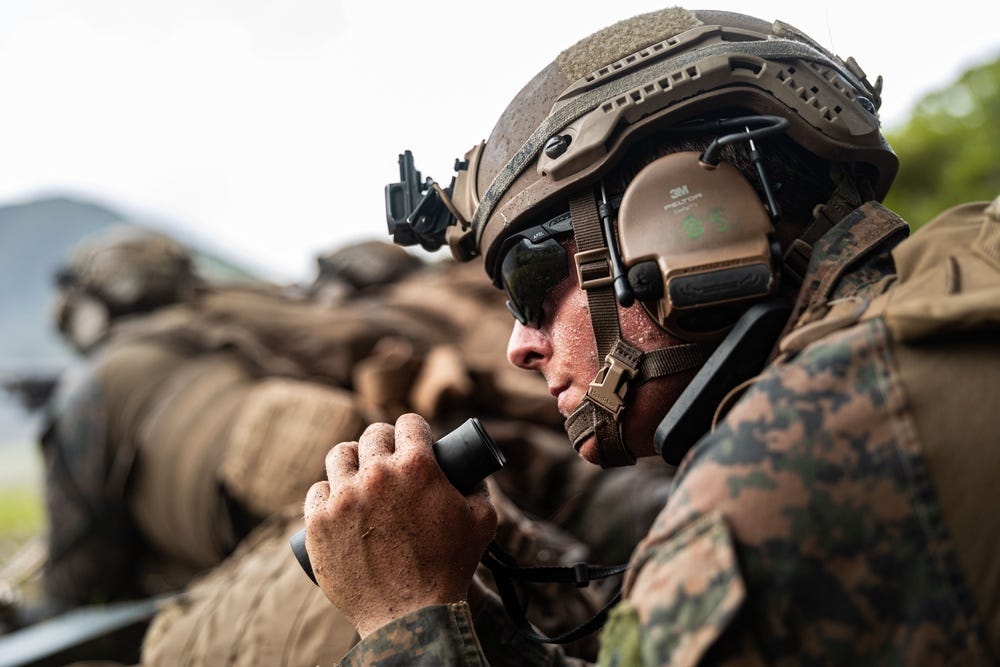
Combat arms Marines will execute increasingly complex missions requiring a diverse skill set, including the integration of new platforms, partnering with allies, and executing fieldcraft – all demanding individual motivation and skills. The Stand-in Force Concept and Force Design envision Marines on contested maritime terrain with unprecedented responsibility and autonomy, under minimal oversight, placing a premium on exceptional individual and unit skills. Soon, the infantry squad will integrate drones in an all-domain contested environment, clearing fires across the joint force, including loitering munitions and directed energy systems, while augmenting their decision-making with machine learning, all while contending with fatigue and friction. The future infantry will reflect this growing Training and Readiness Manual, reflecting complexity, demanding more of its combat arms Marines.
As the demands placed on combat arms Marines grow, our understanding of learning and cognitive science is also increasing. Today’s Marines face distractions unknown to, or misunderstood by, previous generations, which can dysregulate dopamine, thereby inhibiting the motivation needed for unit and individual skill development. Acquiring and maintaining skill proficiency hinges on motivation, which is driven by the neurotransmitter dopamine. The Marine Corps’ future increasingly relies on how Marines regulate dopamine, yet it has neither acknowledged nor addressed how dopamine regulation affects Marine performance in operations. Combat arms Marines must now educate themselves on dopamine regulation to transform the Corps’ planning concepts into operational capabilities.
Standing between Marines and skill acquisition are alluring distractions, most of which are located on their ever-present phones, that fragment attention and erode motivation. Sports gambling, short-form social media, and pornography challenge Marines’ attention spans. These low-cost, high-reward activities distort Marines’ daily dopamine levels, chipping away at the motivation needed for skill acquisition, even in the rare moments when phones are put away. Small-unit leaders must understand the role of dopamine in motivation and implement teaching methods to help Marines disconnect from digital distractions to maximize skill development. Our future mission is not only defined by individual and small-unit initiative, but also by the individual Marine’s initiative and motivation to be trained and ready.



What is Dopamine and what does it do?
Most Marines will not have a science background to understand what dopamine is, its function, and its role in their profession. Neurobiologist and podcaster Andrew Huberman’s work provides a simple, accessible primer on dopamine for all Marines. Huberman describes dopamine as the brain’s primary motivational currency, propelling sustained effort. Dopamine’s release creates a neurochemical state where individuals actively seek challenges and persist through difficult training.
Warfighters experience this state, but do not have the science explaining the why. Crucially, dopamine levels operate on a relative baseline—when elevated through easy rewards like social media, gambling, gaming, and pornography, the brain requires increasingly higher stimulation to generate the same motivational drive. This neurochemical reality affects a Marine’s ability to find satisfaction in the delayed gratification of demanding, incremental progress of skill acquisition. Conversely, imbalanced dopamine levels make sustained focus, a state required to master fieldcraft and learn new platforms, become neurochemically unrewarding.
Research papers add more detail and rigor to the digestible podcasts, linking dopamine to drive, motivation, and, critically, decision-making. In a state of low dopamine, one finds oneself unwilling to initiate and sustain efforts. Low dopamine levels are associated with a reduced sense of pleasure and fulfillment, which in turn lowers satisfaction with one’s profession. A 2016 study found that dopamine modulates working memory and decision-making “during effortful cognitive action”—i.e., warfighting. A simple dopamine imbalance degrades not only one’s quality of life, but also their ability to function in a fluid, physically and cognitively demanding environment.
Dopamine is not only the impetus of motivation, but it is also the driver of addiction. As many of us understand, we can train our brains to form habits, but when left unchecked, these habits can turn into unregulated impulses that degrade a healthy balance in our lives. Whether it is consuming mindless games on your phone or exercising to excess, dopamine plays a role. For a deeper dive into the addiction side of this neurotransmitter,Dopamine Nation: Finding Balance in the Age of Indulgence by Anna Lembke, is a good starting point.
Command Responsibility
The civilian sector is becoming aware of dopamine’s importance and role. Books such as Stolen Focus and Nudge introduced the science of distraction and behavior modification. Cognitive awareness serves as a precursor to taking prudent self-directed action – a hallmark of professionalism.
Rather than expanding the surveillance state for small units, Leaders could make “screen fasts” a competition. For instance, at the battalion level, squads can compete to see which squad can go the longest without their devices over a week. Each squad locks away their phones and smartwatches during the day, following a schedule posted on a whiteboard. The squad learns, eats, and trains together. This competition is not a survival contest or a mere exercise in asceticism, but a chance to reset dopamine levels and force small-unit leaders to devise alternative training methods. At the end of the week, squads must judge the training and the lifeblood of their unit – cohesion. Removing distractions is not just a means to acquire skills, but also a way to build trust with fellow Marines.
How good do you feel when you leave the field free of distractions and focused on interpersonal relationships, forged through shared challenge and hardship? Only to feel that fall away as soon as we pull our phones back out of our packs. The last several years of research have brought a scientific explanation for this surge and withdrawal of these emotions.
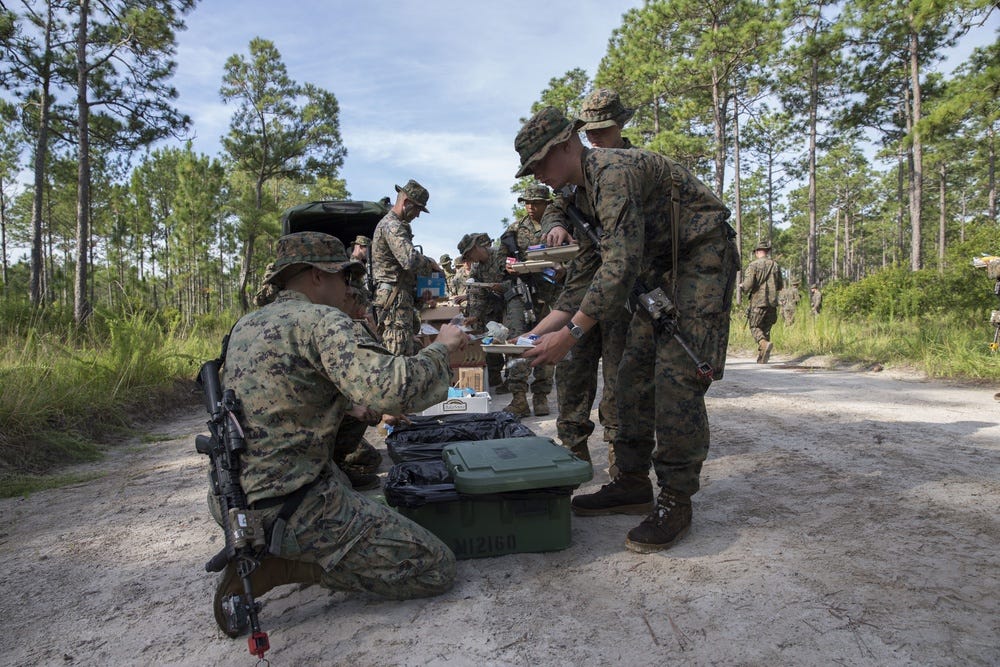
Of course, this is to say nothing about the increasing tactical necessity of emissions control and force protection that surrounds the use of PEDs. Have you ever seen an alcoholic Marine go through withdrawal at the start of deployment? Do you believe alcohol and drugs are the only addictions that feature withdrawal symptoms?
A previous attempt by then-MajGen David Furness, while commanding general of 2d Marine Division, beat back the erosion of standards and foster cohesion was met with cries of micromanagement. This author’s argument will likely be challenged with counterfactuals about how off-duty behavior is no concern of leadership or how attempts to curb digital diversion are an extension of the “nanny state.” However, off-duty activities that diminish readiness and cohesion pose a threat that demands a response.
Monitoring dopamine and attention starts at the top. Officers and Staff Non-Commissioned Officers (SNCOs) should begin tracking their digital consumption and gaining awareness of their dopamine levels. Screen time tracking is a starting metric to judge attention and then gauge the effects on dopamine levels. Beginning with open-source resources such as podcasts and books can help build awareness of dopamine’s importance and its imbalances. As these sources all point out, awareness is the starting point of change. When an officer or SNCO call is scheduled, make it known to the battalion that no phones will be present, shifting responsibility to the rest of the unit. This shift sends a powerful message to the unit that leaders can and will disconnect. When officers and SNCOs take ownership of their attention and dopamine regulation, they can begin implementing practices for their battalions, companies, and platoons.
Critics of this argument may contend that dopamine regulation is an off-duty concern, unrelated to readiness. However, motivation drives Force Design and the SIF concept. Marines must recognize the pervasive and pernicious nature of modern technology, which can ensnare and isolate its users, particularly young men, the vast majority of combat arms Marines. If Marines receive instruction on alcohol consumption and tobacco use – as the rates of use decline for young people – while ignoring the insidious effects of technology, the Marine Corps’ grasp of the influences on its Marines, particularly its most junior, becomes questionable.
The Marine Corps provides an ambitious training and education framework, but warfighters can take responsibility for regulating dopamine and adapt instruction methods to make it a reality. The Corps allows and encourages bottom-up refinement. Today, small-unit leaders, like those before, can step into the gap between guidance and execution to fashion solutions. Managing dopamine and attention is the prudent exercise of initiative and represents a shift in mindset. In future missions where combat arms Marines will find themselves partnered with Japanese or Filipino forces on key terrain, operating off of command’s intent in a communications-degraded environment, feeding information to the joint strike complex, small unit leaders’ nerve, wits, and will become paramount. It is better now to fill in the knowledge and skill gaps than to await guidance from above.
Instead of waiting for guidance from above, units can begin carving out time and space in their training schedules to support dopamine regulation and eliminate digital distractions. For instance, platoons can institute screen-free periods during a block of instruction on a new topic, such as drone employment in Ukraine. Rather than using PowerPoint, force NCOs to map out lessons on whiteboards or butcher paper. Force junior Marines to use the green monster notebooks to record their notes and train their attention on the material. Then, without the aid of electronics, force the class to demonstrate the new skill, complete a tactical tabletop exercise, develop, and then brief a concept of employment. Units should consider creating a control- and variable-group comparison between analog and technologically aided instruction.
Technology is an important and useful educational tool. However, the pivot from electronic instructional methods to rudimentary means is not just a personal preference but is supported by scientific research. In a 2014 study, students who took notes longhand performed better than those who took notes on a laptop. A 2017 study was even more alarming, which found, “that the mere presence of smartphones may reduce the availability of attentional resources even when consumers are successful at controlling the conscious orientation of attention.” Dr. Ezekiel J. Emanuel’s recent New York Times piece on the outcomes he observed after banning digital devices is a short, instructive read on how digital dependency inhibits learning and skill development.
Conclusion
Professionals do not choose; they shape their environment. The allure of the smartphone, the connectivity it brings, and the pleasure it offers prove too essential and compelling. Yet warfighters must recognize that they control technology and must reject digital enslavement. The linked resources in this article are a starting point for cognitive awareness, stoking discussion and prompting self-reflection.
In line with this publication’s proactive spirit, individual Marines must take ownership of their dopamine regulation. Rather than waiting for the MarineNET or PowerPoint class, warfighters need to recognize that their sensation seeking and scrolling is their responsibility, not the Corps’. Abundant, high-quality, free, open-source resources on dopamine regulation empower warfighters to exercise agency over their attention and train their focus.
Combat arms Marines can empathize with Hyman Roth. In The Godfather II, Roth explains to Michael Corleone the reality of his brutal, cold, and capricious business.
“And I said to myself, this is the business we’ve chosen; I didn’t ask who gave the order, because it had nothing to do with business!”
Combat arms Marines did not ask for the missions and the dopamine regulation that underpins their execution, but they did choose this business. Attention, discipline, and cognitive readiness have always been part of the job. What’s new is that we can now understand them, train them, and sustain them with a level of fidelity we’ve never had before. These Marines remain in service to, not separate from, American society and must recognize how distraction detracts from their daunting mission. The focus on where their attention goes is not a solitary pursuit, but a means to better serve America. Just as we expect and demand that Marines maintain their body composition and a high degree of physical fitness, they must also manage their mental fitness. Awareness of attention enhances the absorption, recall, and application of training under the worst conditions, not only an assigned mission, but a sacred duty.
Major Benjamin Van Horrick is an active-duty Logistics Officer based in Virginia. He can be reached at benjamin.vanhorrick@usmc.mil



Benjamin, this really made me pause and think about readiness in a way I hadn’t before.
Posting this on Substack, being a kind of social media, is quite ironic