
Saved Round: Mountain Combat
The CxFile Staff
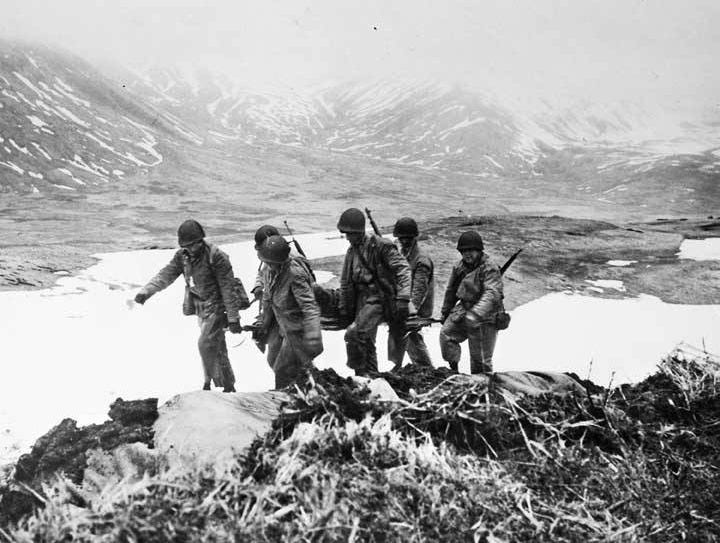
The latest School of War Podcast episode features former 0302, and current Command Historian for NORAD, Lance R. Blyth. He’s the author of Ski, Climb, Fight: The 10th Mountain Division and the Rise of Mountain Warfare and in both this podcast, and his book, delivers a primer on why mountain warfare is its own problem set and how the Army during WWII learned to solve it. This podcast is excellent for many tactical and leadership reasons - yet alone Blyth’s own personal stories of serving during the LA Riots (he confirms the often cited covering fire story). Here are some highlights from the podcast and his work.
Key Takeaways
Translate civilian expertise to combat advantage. Blyth’s core point echoes through the 10th’s origin story: the techniques that keep you alive and moving in mountains—route finding, snow travel, belay systems, avalanche awareness, cold-weather sustainment—were borrowed from civilian climbers and skiers, then adapted for war. This was a formal process, not a coincidental occurrence. For instance, the National Ski Patrol became the Army’s recruiting arm for the 10th by screening and funneling thousands of capable outdoorsmen to the unit. Additionally, the American Alpine Club network supplied instructors and mountaineers, while supporting R&D efforts for clothing and equipment.
The draft plan for Taiwan (Formosa). In 1944 the U.S. developed Operation CAUSEWAY, an OPLAN for the invasion of Taiwan. Planners anticipated brutal terrain, heavy defenses, and massive force requirements, and ultimately shelved the operation in favor of Luzon, Iwo Jima, and Okinawa. The episode underscores how U.S. planners thought hard about matching terrain with specialized units, such as the 10th Mountain Division.



What We Can Use Today
Train movement, not just “mountain PT.” Build reps in efficient climbing under load: fixed-line ascents/descents, handlines on Class 3–4 terrain, and snow travel fundamentals. Treat movement techniques like weapons training: intentional, deliberate, short, frequent, and standards and conditions based.
Rehearse vertical logistics. Cold-weather fieldcraft and resupply make or break the operation. Plan fuel, water melt time, and stove maintenance; practice casualty lowers/raises and sled hauls on fixed lines; test insulation for radios/batteries and mitigate comms dead space with preplanned relays.
Route selection = combat power. In the Apennines, the 10th cracked the Gothic Line by going where the enemy assumed you couldn’t. Notably the night climb up Riva Ridge before Mount Belvedere during Operation ENCORE with the Brazilian Expeditionary Force. Make terrain analysis (slope angle, fall lines, avalanche paths, micro-terrain for cover) a priority aspect of your tactical planning.
Leverage the experts. Partner with local alpine clubs, ski patrols, guide outfits, and SAR teams to import instructors for anchor building, avalanche rescue, and winter bivouacs. It’s historically authentic and faster than reinventing doctrine. The American Alpine Club.
Respect the mountain. Blyth channels Clausewitz: mountains slow everything. Adjust rates of march, ammo burn, and warming cycles; set red lines for exposure and cold injuries; brief contingency lines tied to weather windows, not just the H-hour or the loss of capabilities.
Why This Matters to Us
Our future operating concepts call for distributed, small-unit action in complex terrain—from littoral cliffs (the majority of accessible beaches in the pacific feature these) to volcanic island interiors. Speed is a weapon and speed in mountains is a trained technical skill, not a byproduct of fitness and toughness alone. Units that don’t properly develop mountain skills will move slow, communicate poorly, and bleed combat power to preventable injuries. Units that deliberately tap both military and civilian expertise, standardize techniques, and kit accordingly can open routes the enemy won’t anticipate.
PME Links
A primer on Taiwan’s geography and the tallest mountain range in east Asia
The Ghost Mountain Boys: Their Epic March and the Terrifying Battle for New Guinea--The Forgotten War of the South Pacific. A case study on fighting on Papua New Guinea, which featured some of the most difficult terrain and environmental conditions of WWII.
Have mountain or alpine TTPs or lessons learned you want to share? Currently at MWTC and want to send us an update of your training? Have you taken part in foreign military exchanges that include mountain warfare training? We want to hear from you! Drop us a note at cxfile0302@gmail.com.



I'd hope that one day the Army will move their Mounrain Warfare School back to Colorado, and that the 10th Mountain and 4th ID will swap places.
Regsrding the USMC, I think its high time we stationed at least a Reserve Company, let alone a Battalion/ Active Battalion in Bridgeport.
Another WW2 instance in which the Army had to call upon civilian expertise was in the creation of the glider force to support parachute formations. They began by bringing in civilian sail plane and soaring pilots.